


Cars, The E.P.A., and The Elephant In The Room, Pt. I
- Justin Sifford

- Nov 26, 2021
- 10 min read
The ongoing dance of wits between the thriving car industry, the United States government, and car enthusiasts far and wide.

We All Knew It Would Come To This...
In life, we all are subject to certain events that will challenge us to our core. Most call them tests, especially if you are of the spiritual type. But the automotive enthusiast community has been going through a test for years now, in the form of what most involved would call "government overreach", and it can be attributed to such a claim, based on many factors of attempted and passed legislation, policies, and regulations to limit the abilities of individuals and their customizations to their automobiles. But, I am not here to preach the subject of why the E.P.A. is our "enemy", I am here to give a thorough analysis and form an educated perspective on the very delicate situation. I am not going to place blame for anything on either side, but I will not pull any punches, or deny any science to justify the truth. Agree with me or not, it is what most just don't want to hear, understandably fueled by the fear of losing our livelihoods, passions, and hobbies.
Let Me Explain
Firstly, I would like to preface this whole article by saying that I am a full blown, octane-fed, rubber burning car enthusiast, with the same likes, dislikes, and formulated opinions of most enthusiasts that I am proud to share the term with. But, that does not mean I have to subscribe to negligence by including myself with those who choose to ignore the massive elephant in the room. To put it very bluntly, we have contributed to climate change. I know it's hard for some to hear and accept, and most will likely still deny it, but the truth is still the truth whether you agree with it or not. The proof, quite frankly, is in the warm pudding. I am one hundred percent certain that most enthusiasts who disagree now are probably calling me a "liberal puppet" or a voter of a certain party that shall remain unnamed because this isn't about politics. This issue in the community should never be about politics, because it affects car enthusiasts outside of this country as well. The Environmental Protection Agency is an American, executive office appointed agency, but its policies are reflected and exemplified by other nations, and are used to set their own emissions standards. We can start the dissection of what exactly happened to get us here, and also why the E.P.A.'s involvement with cars actually gave us better products, and helped the industry massively in the twenty-first century.
A Little History Lesson
Long before the days of the Environmental Protection Agency and C.A.R.B. (the California Air Resources Board), automobiles were loosely regulated regarding their exhaust emissions, and evaporative emissions. It wasn't until the early 1960s when some regulations began to try to limit the pollutants of vehicles that operated on public roads. The introduction of recirculated Positive Crankcase Ventilation, or PCV, was phased into regulation beginning in 1963, and was made mandatory shortly after. Automobiles were seen as the major contributor for smog pollution in major cities across the nation, and around the world. Understandably, the auto industry was not thrilled by this forthcoming discovery, and many attempts were made at bandaging the issues, rather than trying to engineer meaningful solutions. Increased cost, and higher technology led to a long tug-of-war with government regulation regarding the pollution created from the automobiles produced by the manufacturers. The main concern of the C.A.R.B. and all other investigative parties were the carbon monoxide (CO), hydrocarbon (HC), lead pollutants, and nitrogen oxides (NOx) pollutants that were found to be a contributing factor to smog. Reductions of these elements of pollution led to a significant improvement of air quality, and now most vehicles operate in the threshold of nearly zero on most pollutants.

Improved manufacturing technology spawned great innovations to help the automotive manufactures surpass these stringent regulations on emissions, and for the most part, they have succeeded in that effort. the introduction of catalytic converters to reduce carbon monoxide and hydrocarbon emissions in the mid 70s was a huge win for the regulators who wanted to clean up emissions. It did negatively impact the car industry, as the Muscle car era was sacrificed to give us cleaner air. Lead was removed as an additive to automotive gasoline starting in 1974 subsequently, and was phased out completely and banned in 1995. It existed long enough where some places still offered leaded gasoline, but the fuel filler diameter on cars equipped with catalysts and emissions control devices was narrowed, to detent the larger sized nozzles on leaded gasoline pumps. This restriction had to be made, because the leaded fuel would destroy the catalyst by coating it in lead, and indemnifying the metals inside of the honeycomb ceramic element inside the catalyst unit.

But, this isn't a tech article on emissions control equipment, it's just to get you up to speed on what the E.P.A.'s mission was, and is to this day: to clean up the dirty emissions of our vehicles. What they have contributed to the advancement of automotive technology is profound, and shouldn't be taken for granted. Because, they really could have left well alone, and we would be in a much worse place than we are today.
So Why Should We Care?
Beyond what the result of doing nothing about the environmental air quality would have on our health and our existence, these increased standards for emissions have actually helped us enthusiasts along the way. Yes, I hear you screaming at me about this and that, but just hear my words here. On Board Diagnostics, high efficiency turbochargers, electronic fuel injection, and variable cam timing systems. All of these innovations share one common denominator: they all are a result of emissions regulations. Let that marinate for a second, all of the technology that has given us some of the best performance cars and engines of our generation is a result of regulations that most will disagree with their efficacy, and refuse to acknowledge their importance. Without the E.P.A. breathing down the manufacturers necks, we would've probably never embraced the modern marvel of electronic fuel injection. The proof is in the pavement with this one, General Motors hanging on to the carburetor as long as possible, all the way into the early Eighties until the fiasco of Throttle Body Injection appeared on the scene. In addition to cleaning the air, the environmentalists helped us move faster through it. With the embarrassing performance figures of the late 70s and 80s, the resurgence and rebirth of power in the early Nineties with the arrival of new muscle from Detroit and overseas was a new glimmer of hope for the enthusiast of yesteryear. All of these regulations invoked technological advances to put them back on the map, and be competitive in the markets again.
Figure 1: Increase In Horsepower Over Time, Prominent Muscle Cars
Car Model | Horsepower (Pre-SMOG) | Horsepower (Post-SMOG) | Delta |
Chevrolet Camaro | 1967 SS 350: 295HP | 2016 LT-1: 455HP | +160HP |
Ford Mustang | 1967 390: 335HP | 2015 5.0: 435HP | +100HP |
Dodge Challenger | 1970 R/T: 335HP | 2015 R/T: 485HP | +150HP |
Consulting the table above, the net increase in power can truly be ascertained to the advancements in technology as a result of the introductory period of new emissions regulations. Once the manufacturers got the hang of all of the new technology, the flood gates opened, and the performance was back, with the added ability to eliminate the vast majority of harmful pollutants from the air. With researching the data in this above chart, one could conclude that the four cylinder engines offered today make the same horsepower as the mid range V-8s of the time. Engine tuning is another story, with individuals, and aftermarket companies pushing over 400 horsepower out of the smaller turbocharged engines offered in Mustang EcoBoosts, and with half the cylinders of their GT counterparts, these engines are truly the hot-rod powerplants of today. But, moral of the story is, you can thank the C.A.R.B., E.P.A. and C.A.F.E. (Corporate Average Fuel Economy) regulations for these advancements. I personally love to be in an era where my A6 can make 330 horsepower, and still get 30MPG on the highway, and not kill the planet as fast as my '62 Buick.
Fair, So Why Are They Still On Our Backs?
Well, it is an interesting question now, isn't it? I can give an honest answer to it that will anger the oil and gas industry. Carbon neutral fuel. Even though smog pollution is virtually nonexistent, we still have another issue in the form of greenhouse gasses such as CO2. On a brief science anecdote, a lot of objects, phenomena, and organisms emit carbon dioxide (CO2), and we really have an issue with the fact that the byproduct of our CO-HC-NOx reaction in our catalytic converters produces CO2, which we cannot particularly break down further. In recent developments, the idea of using a carbon-neutral synthetic hydrocarbon for our internal combustion engines has been thrown around with some massive weight, i.e. Porsche being behind the development. By using carbon capture technology, and increasing green areas to convert CO2 into oxygen, a carbon neutral fuel will essentially be the ticket to curbing greenhouse gas emissions, as no new carbon released from burning fossil fuels will enter the atmosphere, and will remain the same level as was before use. This technology alone could save internal combustion as we know it, but vested interests in fossil fuels have long overpowered alternative fuels to benefit major conglomerates.

The Community Speaks Out
So, you can understand why the need for change in how we preserve our passion is growing, and the encroachment of the E.P.A. on off-road racing vehicles has been a line drawn a little too far for most of us. To summarize what I just mentioned, new legislation has made its way back into the spotlight with the object of preventing individuals and companies from using production vehicles as racing vehicles with no forms of emissions regulations. This proclamation has angered and concerned the entire automotive community, because entire industries are built around production-based motorsports, such as Formula Drift, various forms of off-road racing, drag racing, and many other smaller divisions of motorsports, on an entry level. SEMA (the Specialty Equipment Market Association), which is the the largest organization in support of aftermarket vehicle modifications is fighting this legislature tooth-and-nail, and wants to actively protect a billion-dollar industry from what would be a dismantling blow. SEMA, with the R.P.M. Act, seeks to protect motorsports with the legislature to prevent off-road, unregistered racing and show vehicles to be rendered immune to Federal emissions laws, and free from enforcement under the Clean Air Act.
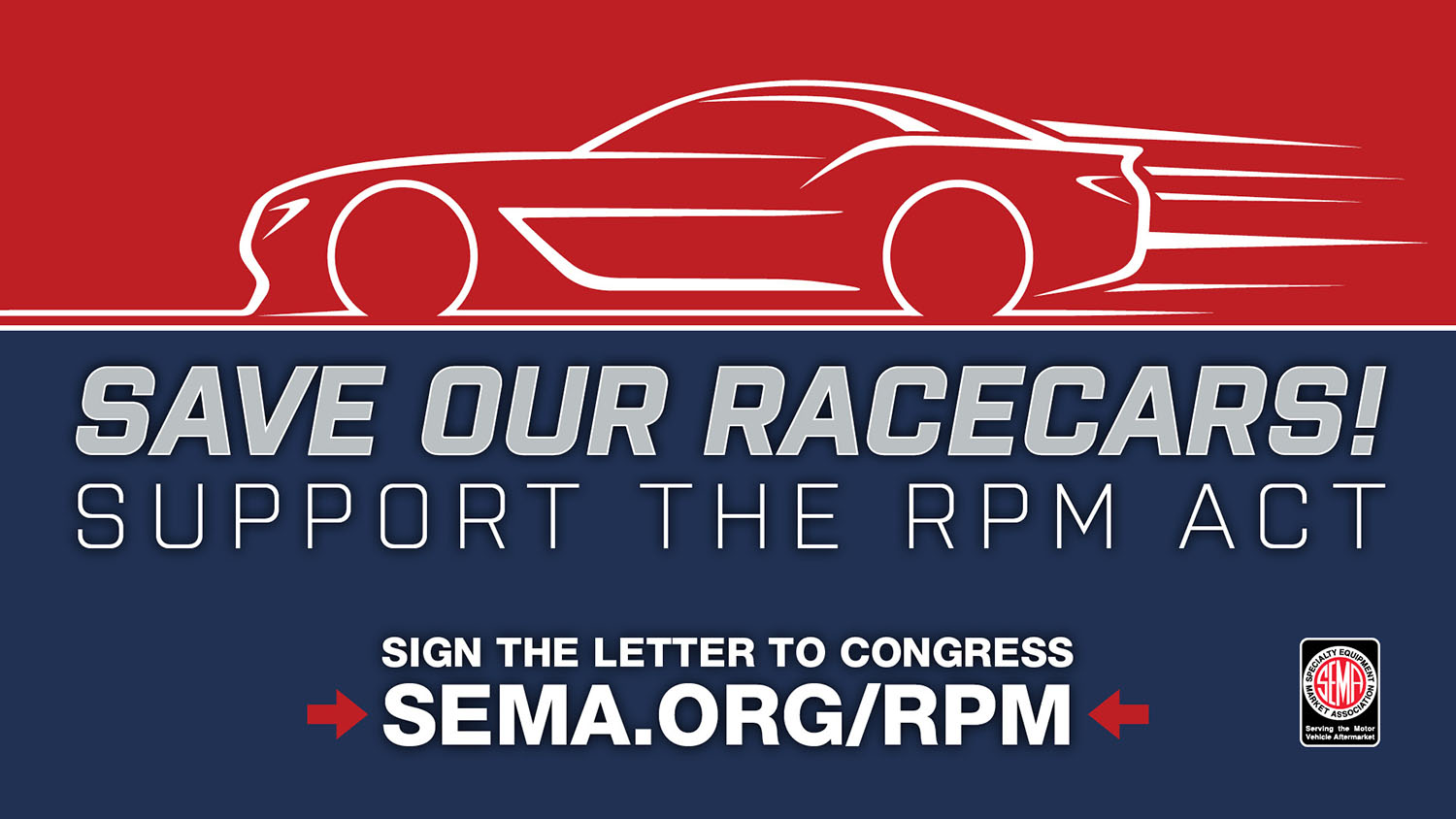
However, the E.P.A.'s sentiment is based in a little truth. Hear me out, there is no regulation regarding the emissions of off-road and limited-use racing and show vehicles, because their environmental impact is seen as less than that of normal production registered vehicles. With that being said, the E.P.A. can see straight through the smoke in the mirrors, and a lot of street-driven examples of the vehicles that fall under this category make up the loud minority. I am not in support of people who break the law, as we are basically at the mercy of the people who enforce it if we want to continue to peacefully enjoy our hobbies. This sight of loophole extortion however, it should not be reason to punish those who abide by the laws, and the guidelines set forth by the governing bodies of state legislatures. There are Federal emissions requirements that cars must "adhere" to, but more weight is given to the states when it comes to registration of said vehicles, and their assessment of roadworthiness. States with more lenient regulations let individuals register and drive cars that pollute our air. Along with the E.P.A., I think that is wrong to an extent. I understand that if the option is there, some will take it, but for what reason? There should at least be some acknowledgement of your footprint, or a way to offset it. To be clear, I am not siding with any one party in this section, I am just being transparent to what reasoning there is to justify the actions taken. Just as much as the next enthusiast, I do not wish for any of this to happen, as I am building a production racecar myself, and due to North Carolina law, I would be permitted to drive it on public road, as long as it passes a safety inspection. Yes, it may violate some Federal emissions control standards or the 1977 model year, but I will not drive the car to make a significant footprint to the atmosphere.

My last point for part 1 will rebound off of the last paragraph, where I make a series of suggestions for us enthusiasts that want to see our passion be passed down to our successors. Firstly, we should be aware of our environmental impact, and acknowledge that we can make a difference with our voices and our actions. Secondly, we should give support and publicity to those who want to help us, regardless of political affiliation, and uplift each other for the common goal of preserving our passion. We cannot do this alone, and if we don't have our voices heard in a positive manner, we cannot expect any different from people who do not understand. Expressing to non-enthusiasts that we as a community recognize our impact, and will work to decrease our footprint would be a great step in solidifying the safety of our passion. And for those of you reading who are not particularly enthusiasts, I applaud you for making it this far, because it takes every one of you to spread the truth that us car enthusiasts aren't what we are stereotyped to be anymore, or at least some of us are trying to change the view of the community not believing in climate change or acknowledging our environmental impact. And lastly, encourage folks to read about different stories, tech articles, and testimonials within the community, and gauge how we all perceive our passion, and how much we all are willing to do to preserve it. Investing in carbon neutral synthetic fuels, volunteering our time, money, and support to environmental efforts to offset our impacts, and being a generally good Samaritan to those who really support climate activism, and not to demean people for the use of language that criticizes cars, and give well-thought, educational insights on why we love our vehicles, and the pledge we take to exist alongside those who are concerned with environmental wellbeing. There are numerous individuals who are unable to see our passion for automobiles, and see them as a mere appliance. But, these individuals also may have a passion of their own, and connecting with them on a level they may understand will help in those situations. I've been there many times. Regardless, just be good ambassadors to the community, and please don't forget to mention how many steps have been taken to correct our issues, it helps.
As always folks, stay safe, be kind, and never, ever stop learning.
Look for part 2 coming soon!


Comments